
GI Chemical Electrode
GI Chemical Electrode Manufacturer
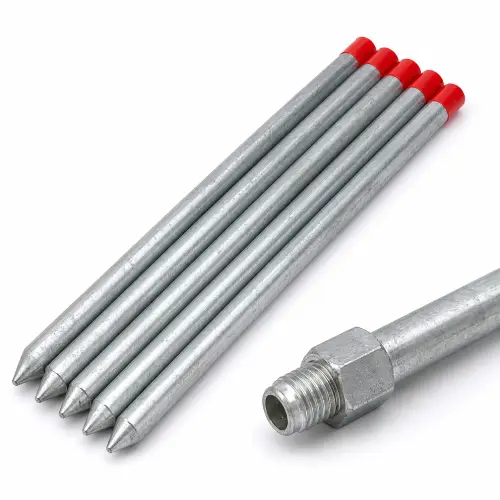
Industrial Electric is a reliable GI Chemical Earthing Electrode Manufacturer supplying galvanized iron chemical electrodes for electrical grounding and earthing installations. These electrodes are used as part of engineered earthing systems in industrial plants, commercial buildings, substations, solar projects, telecom facilities, infrastructure developments, and other locations where dependable grounding is required.
Understanding GI Chemical Earthing Electrode
A GI Chemical Earthing Electrode is a galvanized steel electrode installed in the ground and connected to an electrical system through a suitable earthing conductor. In a chemical earthing arrangement, the electrode works together with an appropriate conductive or moisture-retaining backfill material to improve the surrounding electrode-to-soil environment. The effectiveness of the installation depends on several factors, including soil resistivity, electrode dimensions, installation depth, moisture conditions, backfill material, connection quality, and the overall earthing design.
About Industrial Electric
At Industrial Electric, we supply earthing and grounding products for electrical contractors, EPC companies, industries, builders, infrastructure developers, solar installers, and project procurement teams. Our GI Chemical Earthing Electrodes are supplied according to the requirements of the application, with attention to dimensions, material, galvanization, connection arrangement, quantity, and project specifications.
What Makes GI Chemical Earthing Electrode Different?
A Chemical Earthing Electrode is designed to work as part of an enhanced grounding arrangement rather than functioning independently. The electrode is installed with suitable surrounding material to create a more consistent environment around the grounding surface.
The GI construction provides the mechanical strength of steel along with a zinc coating intended to improve resistance to environmental exposure. This makes the product suitable for projects where a dedicated chemical earthing arrangement has been specified.
Manufacturing Process
The manufacturing of a GI Chemical Earthing Electrode requires attention to the electrode’s dimensions, material quality, surface preparation, and galvanization.
- Material Preparation
Suitable steel is selected according to the required electrode dimensions and application.
- Forming & Fabrication
The electrode is processed to achieve the specified diameter, length, shape, and connection provisions.
- Surface Preparation
The steel surface is cleaned and prepared before the galvanizing stage.
- Galvanization
A zinc coating is applied to the prepared steel surface to provide protection against corrosion and environmental exposure.
- Inspection
Finished electrodes are inspected for dimensions, surface condition, coating consistency, and overall manufacturing quality.
- Packing
Products are securely packed to protect them during storage, handling, and transportation to the installation site.
Key Reasons to Choose This Product
- Galvanized steel construction
- Designed for chemical earthing arrangements
- Suitable for underground installation
- Good mechanical strength
- Zinc coating provides corrosion protection
- Available in different dimensions
- Can be used with suitable earthing compounds
- Suitable for industrial and commercial grounding projects
- Convenient for project-based procurement
- Suitable for new electrical installations and expansion projects
Performance Specifications
The exact specification should be selected according to the approved earthing design.
Parameter | Specification / Consideration |
Product | GI Chemical Earthing Electrode |
Material | Galvanized Steel |
Surface | Zinc Coated |
Electrode Length | As required |
Electrode Diameter | As required |
Connection | According to project design |
Installation | Ground / Earth Pit |
Backfill | Suitable chemical earthing compound |
Application | Electrical Grounding |
Environment | Selected according to soil and site conditions |
The actual dimensions, coating thickness, material grade, and other technical values should be confirmed from the applicable product specification or project requirement.
Where GI Chemical Earthing Electrodes Are Used
- Industrial Plants
Suitable for grounding electrical panels, transformers, machinery, generators, and industrial equipment.
- Electrical Substations
Can be incorporated into grounding arrangements for electrical equipment and structures.
- Solar Power Projects
Used in engineered grounding systems for solar structures, inverters, electrical equipment, and associated installations.
- Commercial Buildings
Suitable for grounding systems in offices, warehouses, shopping complexes, institutions, and other commercial properties.
- Telecommunication Facilities
Can be used for grounding communication equipment and supporting infrastructure where specified.
- Infrastructure Projects
Useful for electrical grounding requirements in factories, utility installations, construction projects, and large infrastructure developments.
Factors Affecting Earthing Performance
The performance of a chemical earthing system is not determined by the electrode alone. Before selecting the product, the following factors should be evaluated:
- Soil resistivity
- Soil moisture
- Groundwater conditions
- Electrode dimensions
- Installation depth
- Earthing compound characteristics
- Conductor size
- Connection quality
- Required earth resistance
- Environmental and corrosion conditions
A qualified electrical professional should design and test the complete earthing system according to applicable requirements.
Installation Considerations
Proper installation helps the electrode perform as intended. The electrode should be positioned according to the approved earthing design and surrounded with the recommended backfill compound.
The installation generally involves:
- Preparing the earth pit or electrode location.
- Installing the GI chemical electrode at the specified depth.
- Making a secure connection with the earthing conductor.
- Placing the recommended chemical earthing compound around the electrode.
- Ensuring suitable contact between the electrode and surrounding material.
- Completing the inspection arrangement.
- Testing the completed grounding system.
The exact procedure should follow the manufacturer’s instructions and project specifications.
Why Choose Industrial Electric?
Industrial Electric focuses on supplying earthing products according to actual project requirements. We understand that a chemical earthing system needs compatible components rather than isolated products selected without considering the installation.
Our Advantages
- Application-focused product assistance
- GI chemical earthing electrodes for different requirements
- Support for bulk and project orders
- Attention to product dimensions and specifications
- Suitable for industrial and commercial applications
- Support for EPC companies and electrical contractors
- Reliable procurement assistance
- Focus on consistent product quality
GI Chemical Earthing Electrode Manufacturer in India
Industrial Electric supplies GI Chemical Earthing Electrodes for customers involved in electrical grounding, industrial construction, infrastructure, solar power, commercial buildings, substations, and telecom projects. Customers can share their required electrode dimensions, quantity, application, soil conditions, earthing design, and project location so that the appropriate product specification can be discussed.
Frequently Asked Questions
It is a galvanized steel electrode used as part of a chemical or enhanced earthing system, generally installed underground with a suitable earthing compound.
Galvanized steel combines the mechanical strength of steel with a zinc coating that helps protect the electrode against environmental exposure.
They can be used in industrial plants, commercial buildings, solar projects, substations, telecom installations, infrastructure projects, and other engineered grounding systems.
No. A chemical earthing system normally involves the electrode, suitable backfill material, earthing conductor, connections, and an appropriately designed installation.
